

Bottom line up front: Christine was better than it had any right to be, while Cujo was not as good as it could have been. Continue reading
Bottom line up front: Christine was better than it had any right to be, while Cujo was not as good as it could have been. Continue reading
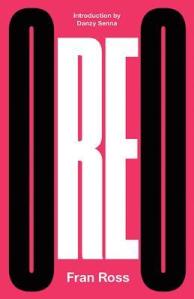
Fran Ross’ Oreo is a book that is smarter than it is good. There’s plenty of interesting stuff happening in Oreo; the problem is that the whole is less than the sum of its parts. The story is a feminist take on the Theseus myth, starring a young half-black half-Jewish woman and set in the 1970s. At its best, Oreo reminded me of A Confederacy of Dunces. It has the same sort of over-the-top intellectual references and arcane descriptions of essentially banal and ordinary situations. The difference is that Confederacy employs its ridiculous intellectualism to make fun of its pretentious main character, whereas Oreo seems to think the constant literary allusions and wordplay are funny in themselves. Continue reading
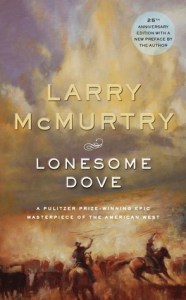
Everyone can stop looking for the Great American Novel, because Larry McMurtry published it in 1986 and it’s called Lonesome Dove. Continue reading
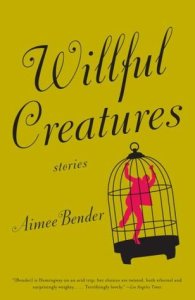
One of the great things about short story collections is that if you come across a story you don’t care for, there’s always the consolation of being just a few pages away from a fresh start. I thought about that a couple of times – not a lot, just maybe two or three – while reading Aimee Bender’s (mostly) delightfully weird Willful Creatures.
There are fifteen short stories in this collection, and in my opinion three are truly great, three fall pretty flat, and the other nine are somewhere in between. What all of them have in common, however, is their essential weirdness. Nowhere in any of this book’s 208 pages will you find a single story that you might read in any other place than in this book’s 208 pages. Continue reading

America’s greatest writers have always been Southerners. William Faulkner, Harper Lee, Truman Capote, Flannery O’Connor, Tennessee Williams – sure, there are greats from other regions of the country, but for every incredible Yankee author you can point to, I could probably rattle off the names of three equally accomplished writers from the south.
There could be any number of explanations for this phenomenon, but I think the simplest and most obvious one is that great literature is often built out of trauma, and the South has had more than its share of those. And so have the characters in David Joy’s Where All Light Tends to Go, and so will they again, and again and again over the course of the novel’s 260 pages. Continue reading
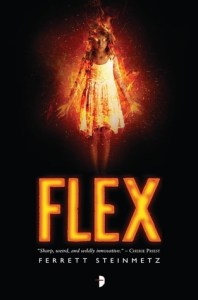
In Ferrett Steinmetz’s Flex, people’s obsessions can wear down the laws of the universe, enabling them to do magic associated with their obsession. Can’t stop playing video games? You may find yourself able to summon those characters into your world, or generate health packs around you when you injure yourself. People whose obsession is art can create living paintings, pyromaniacs can do magic with fire, and cat ladies … well, that one’s never actually explained.
It might be a bit of a disappointment, then – at least at first – to learn that the protagonist of this novel is obsessed with paperwork. He just loves doing paperwork so much that he one day wakes up to find he has magical powers related to filling out forms. I know, it sounds kind of lame. But there’s a lot more excitement in this novel than the main character’s particular talent might suggest. Continue reading
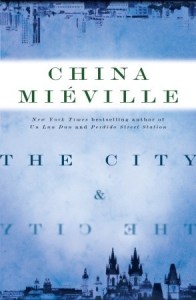
I had been meaning to read a Miéville novel for a long time. I picked up The City & The City on the strength of a really compelling staff recommendation at a bookstore in Astoria. Despite my eagerness to give the author a shot, I was a little wary: The hook of this novel seemed a little far-fetched to me, and I was worried that I would find the whole thing too meta, too would-be-literary for my taste. I needn’t have worried. Despite the fascinating originality of its setting, The City & The City is, at its core, a simple and straightforward murder mystery.

Matthew Desmond’s Evicted is my favorite non-fiction book of 2016 so far. It tells multiple stories, from a close-up perspective, of the devastating effects that losing a home can have on a person’s life. Books like this, I think, are so important – not only for their policy prescriptions but for the way they make us pause and think about what it is like to be something we, perhaps, are not.
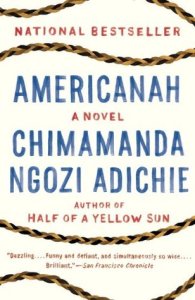
One of the really cool things about novels is how the best ones can make you feel like you’ve experienced them, rather than merely reading them. The stories can feel like something that happened to you. It is a testament to Chimamanda Ngozi Adichie’s virtuosity that she manages this feat despite the fact that the experiences she describes in Americanah are completely foreign to my own.
It would, of course, be completely naive and ridiculous for me to say that after reading Americanah I now understand what it is to be Nigerian in America, or black in America, or a black woman in America. I am none of those things, and one novel, no matter how well-written it may be, can do anything about that. But in reading this book, I had a world opened up to me that, even though it intersects and overlaps with mine in certain ways and places, I had never before seen. Continue reading

Michael Faber’s The Crimson Petal and the White made me very grateful that I own a Kindle. The novel is 864 pages long, so lugging a physical copy around on the subway would have been a chore. My e-reader fit snugly into my coat pocket, making it easy to pull out my reading material when I got on the train and easy to stow it again when I arrived at my destination.
Because it’s such a long book, I was more aware than usual of the absence of paper pages as I was reading my digital edition. It’s a little bit weird, not to have to turn a page, not to be able to see the evidence of your progress through a novel in the form of a growing stack of pages on the book’s left-hand side and a diminishing number remaining on the right. Instead, with the Kindle you get a little indicator at the bottom of the screen that tells you what percentage of the book you’ve completed and how many minutes of reading are left before you finish the current chapter. These conveniences are nice enough, but to me they don’t quite replace the tactile pleasure of being able to physically flip through all the pages you’ve read, or to gauge how much further you have to go by measuring the unread portion of the novel between thumb and forefinger. That’s why I generally prefer physical books, even though our apartment is too small to accommodate all the books my fiancee and I have accumulated over the years.
But Crimson Petal is just too big a book to lug around, so I charged up my Kindle. And maybe it’s a good thing I did, because the more I read of this novel the more I started to feel like the book should be sticky and wet and dripping from its pages all sorts of substances I wouldn’t want to touch. Faber’s great skill as an author is in his descriptive power, and he uses it to full effect here, showing us 1870’s London in all its disgusting wretchedness.
 hereisagoodbook